


For years, American students have heard a familiar message. Get a four-year degree, land an office job, and build a comfortable career. General Motors CEO Mary Barra thinks that message leaves out some excellent options. She says America needs to rethink how it views skilled trades, especially as artificial intelligence starts changing office work.
Speaking with Fortune Editor-in-Chief Alyson Shontell on the “Titans and Disruptors of Industry” podcast, Barra described America’s attitude toward skilled trades as a broader “societal issue.” She argued that careers built around technical, hands-on skills deserve more respect.
Her point comes at an interesting time. AI can now write reports, analyze documents, generate software code, and handle tasks once reserved for trained office workers. Fixing electrical systems, repairing vehicles, maintaining industrial equipment, and building physical infrastructure remain much harder to replace with software.
Skilled Trades Can Offer Serious Earning Power
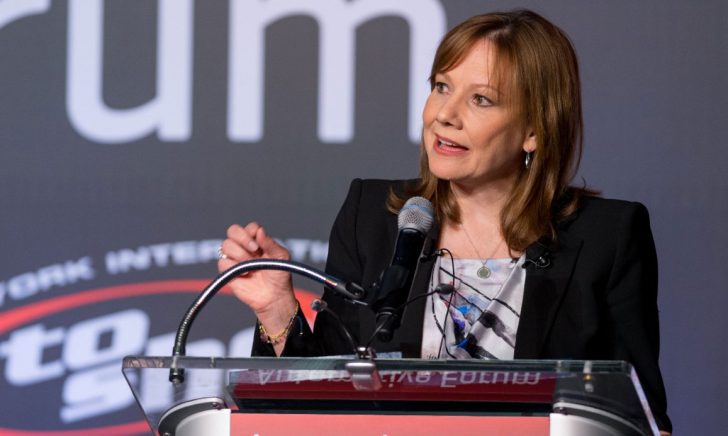
E News / Barra wants high school students to understand what these jobs can actually offer. She told Fortune that a dealer technician can earn somewhere in the $80,000 to $90,000 range.
But that does not mean every technician or electrician earns close to six figures. National wage figures paint a more measured picture. The U.S. Bureau of Labor Statistics reported that electricians earned a median annual wage of $63,190 in May 2025. The highest-paid 10% earned more than $108,510.
Automotive technicians generally earn less. Their median annual wage stood at $50,620 in May 2025, while technicians working for automobile dealers had a median wage of $59,920. Those numbers show why location, employer, experience, specialty, and overtime matter when discussing trade salaries.
Still, the larger point holds. A skilled trade can provide a solid income without requiring every student to follow the traditional four-year college route. Apprenticeships can also allow workers to earn money while developing skills instead of waiting years to enter their field.
Barra sees another advantage that has become harder to ignore. She described skilled trades as potentially “a little more AI-proof than some others.” That does not make any career immune to automation, but physical jobs often require judgment, movement, troubleshooting, and work in unpredictable environments.
AI Is Creating Demand for the Workers It Cannot Easily Replace
There is an interesting twist in the AI boom. Artificial intelligence may disrupt some jobs, but the infrastructure supporting AI is creating demand for skilled workers.
Massive data centers require electrical systems, cooling equipment, construction crews, maintenance teams, and other technical specialists. Barra specifically pointed to strong demand for electricians as companies expand the physical infrastructure needed for modern computing.
The labor shortage extends far beyond GM. The Alliance for America’s Skilled Trades estimates that 2.1 million skilled trade positions could go unfilled across the United States by 2030. The shortage includes technicians, electrical workers, builders, and other workers needed across manufacturing, infrastructure, and energy.
The alliance launched in July 2026 with BlackRock, Carhartt, Ford Motor Company, and Google as founding members. Google says the participating companies are supporting skilled workforce training initiatives across 30 states, while its own programs aim to help train more than 300,000 American workers.
Mary Barra Wants America to Change How It Views Hands-On Work

Gus / Pexels / GM CEO believes the United States has a cultural problem with how it values people who work with their hands.
She told Fortune that Europe shows greater respect for skilled trades and for workers who perform highly technical jobs while building, making, repairing, and servicing physical products. In her view, America has not always given those careers comparable status.
That view is personal for Barra. Her father spent 39 years at GM as a die maker. Barra later entered the company herself as an 18-year-old co-op student and worked on the factory floor before building a career that eventually took her to the CEO position in 2014.