



The U.S. labor market took an unexpected step backward in July, raising fresh concerns about hiring, household finances, and the Federal Reserve’s next move on interest rates.
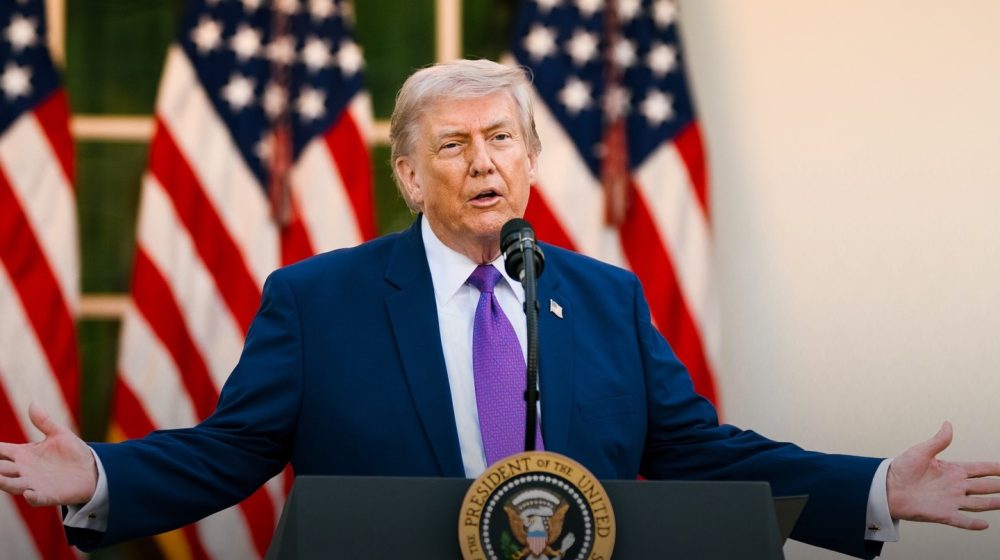
Employers cut 23,000 jobs during the month, while major revisions erased another 103,000 jobs from the May and June employment totals. The report also delivered an awkward political moment for President Donald Trump, with midterm elections less than three months away.
Economists had expected employers to add close to 100,000 jobs in July. Instead, the numbers indicated a labor market losing momentum, even as some parts of the economy continue to hire.
July Hiring Falls Short
The Labor Department’s July report showed a sharp change from the steady hiring seen earlier in the year. Public schools accounted for the largest decline, cutting 50,000 jobs. Restaurants and bars reduced payrolls by 26,000, while retailers cut another 19,000 positions.
The unemployment rate fell to 4.1%, its lowest level since June 2025. At first glance, that figure might appear encouraging. The underlying numbers tell a different story.

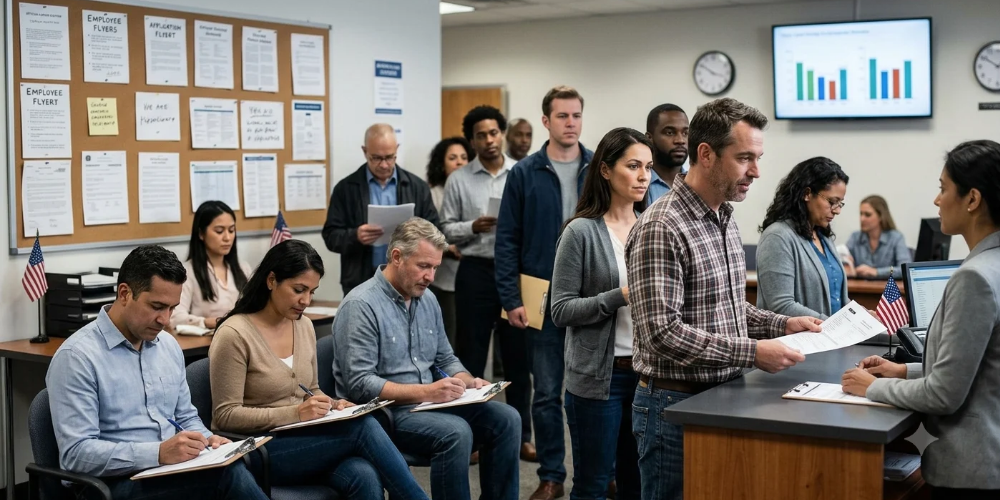
ChatGPT AI | A sharp drop in July hiring ended early-year momentum, driven by 19,000 retail job losses.
About 264,000 people left the labor force in July, meaning they were no longer working or actively searching for a job. As a result, fewer people competed for available positions. The labor-force participation rate dropped to 61.4%, the lowest level since February 2021.
Daniel Zhao, chief economist at Glassdoor, described the report bluntly: “We can’t really put lipstick on a pig here. This is not a great report for July.”
The weak hiring figure also comes after the Labor Department sharply revised its previous estimates. May and June payrolls were reduced by a combined 103,000 jobs, making the recent slowdown more pronounced.
Manufacturing Shows Some Strength
Not every part of the economy moved lower. Construction companies added 22,000 jobs in July, while factories added 5,000. Those gains offered the Trump administration a basis for its argument that tariffs and industrial policies can encourage domestic production.
White House spokesman Kush Desai pointed to the numbers, saying, “The Trump industrial resurgence is on schedule.” He added that manufacturing and factory construction jobs increased again in July while government payrolls continued to shrink.
The broader employment data, however, presented a more complicated picture.
Trump has repeatedly highlighted employment gains among native-born Americans as evidence that his immigration crackdown is helping U.S.-born workers. The July data did not clearly support that argument. Employment among native-born Americans declined by 720,000 over the past year.
That figure needs context. It is not seasonally adjusted and can fluctuate in ways that make it less useful as a measure of overall employment. Still, the White House had previously used the same data point to support its economic message.
What the Report Means for the Fed
The jobs report also creates a difficult decision for the Federal Reserve. Inflation has remained above the Fed’s 2% target for more than five years, keeping pressure on policymakers to consider higher interest rates.
The Fed left rates unchanged at its meeting last week, but three officials dissented and preferred a rate increase. Before Friday’s employment report, financial markets were anticipating rate hikes later this year.
The weaker labor numbers could slow that push.
“The Fed has to consider the health of the job market as they debate whether a hike is justified,” Zhao said. “The softness in today’s report is going to have to give the Fed a little bit of pause.”
Wage growth also cooled. Average hourly earnings increased 3.2% from July 2025, marking the smallest annual gain since May 2021. Slower wage growth can reduce inflationary pressures, but it also raises concerns for households already dealing with elevated living costs.
Heather Long, chief economist at Navy Federal Credit Union, called the report “a bleak jobs report.” She said the labor market is “stalling again” and that the weakness could make the Fed’s decisions harder while creating more difficulties for job seekers.
Women Account for July’s Job Losses

Pexels | Women suffered the month's biggest hit, losing 32,000 jobs and driving all net losses in July.
Women experienced the largest employment decline in July. The Labor Department reported that women lost 32,000 jobs during the month, accounting for all of the net job losses.
The longer-term picture is more favorable for women. They gained 321,000 jobs over the past year. Men, meanwhile, lost 5,000 jobs during the same period.
Economists also pointed out that private payrolls continued to increase in July. The steep decline in public school employment may partly reflect seasonal adjustments rather than a sudden collapse in school employment.
That distinction matters because school payrolls often shift sharply during the summer, making seasonal calculations more difficult.
Hiring Has Recovered, but Slowly
The July report stands in contrast to the hiring recovery seen earlier this year. Employers had moved beyond the weak conditions of 2025, when average monthly job growth reached only 9,700, the weakest result outside a recession since 2002.
So far in 2026, employers have added an average of 61,000 jobs per month. That is a significant improvement over 2025, but it remains well below the 166,000 monthly average recorded during 2023 and 2024.
The labor market also operates under different demographic conditions than it did several years ago. Trump’s immigration crackdown and the retirement of baby boomers have reduced the number of people competing for jobs.
A Federal Reserve study suggests the monthly hiring level needed to keep unemployment stable may have fallen dramatically. The break-even pace stood at about 155,000 jobs per month in 2023 and 2024, but it may now be close to zero.
The “No Hire, No Fire” Economy
The current labor market has created an unusual situation often described by economists as “no hire, no fire.” Companies are not laying off large numbers of workers, but they are also reluctant to bring in new employees.
That leaves existing workers with relatively strong job security while making it harder for unemployed people and new job seekers to find openings.
Layoffs remain low by historical standards. Many companies remember the labor shortages that followed the COVID-19 lockdowns and are hesitant to lose workers they may struggle to replace later.
At the same time, technology and artificial intelligence are changing hiring decisions. Some businesses are using new tools to complete work that once required additional employees, adding another layer of uncertainty to the employment outlook.
Finding a Job Is Getting Harder
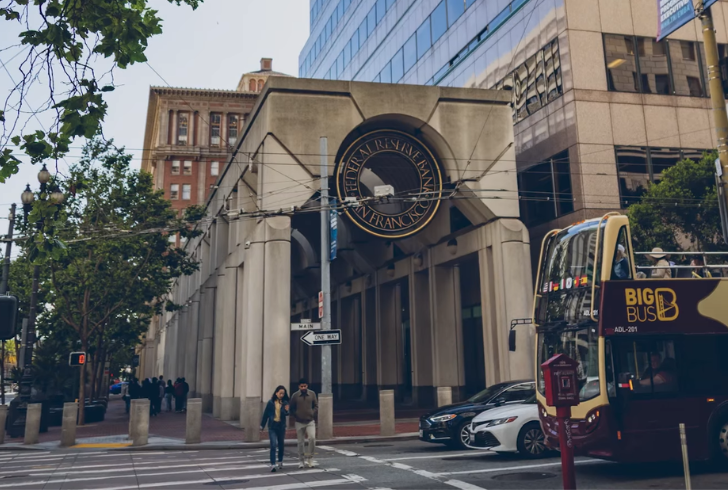
Instagram | sffed | A San Francisco Fed report reveals job seekers are struggling more than expected in this economic expansion.
A recent report from the Federal Reserve Bank of San Francisco found that workers are facing greater difficulty getting hired than expected at this stage of the economic expansion.
Researchers Ingrid Chen, Marianna Kudlyak, and Riva Mikhlin found that the pipeline into employment has weakened, leaving fewer opportunities for workers who traditionally benefit as an expansion continues.
Their research found that even prime-age workers between 25 and 54, as well as college-educated job seekers, are having trouble finding new positions. Normally, employers facing a long expansion would broaden hiring and take chances on younger workers or people with less education.
The researchers said several factors could be contributing to the shift, including tighter immigration policies, hiring reductions among technology companies and government contractors, uncertainty about government policy, and possible early signs of wider labor-market weakness.
What Comes Next for American Workers
The July employment report does not point to a complete collapse in the U.S. job market, but it does show that hiring has become less dependable. Private payrolls are still growing, layoffs remain relatively low, and some industrial sectors continue to add workers.
Yet job creation remains far below recent averages, while people trying to enter or re-enter the workforce face a tougher search.
The report also leaves the Federal Reserve with a more complicated set of choices. Policymakers must weigh slower hiring and modest wage growth against inflation that remains above the 2% target. For workers, the biggest concern may be the widening gap between having a job and finding one.
As the economy moves toward the midterm elections, July’s numbers are likely to keep jobs, wages, and economic policy at the center of public debate.