




A tiny sign inside a Nantucket antiques shop has managed to start one of the summer’s loudest online arguments. Four Winds Craft Guild posted a simple message that read, “No Influencers,” and the reaction quickly spread far beyond the Massachusetts island.
Influencers criticized it, locals defended it, and Barstool Sports founder Dave Portnoy eventually jumped straight into the fight.
Portnoy, who owns a home on Nantucket, strongly supported the attitude behind the sign. His argument was not that every person with a large social following should stay away. Instead, he targeted visitors who arrive mainly to film themselves, chase attention, and turn local businesses into scenery for their content.
View this post on Instagram
Why Nantucket’s “No Influencers” Sign Caused Such a Fight
Owner John Sylvia explained that the “No Influencers” sign was tongue-in-cheek rather than an actual ban. He said his frustration came from visitors who entered the small shop without showing much interest in the objects or their stories.
Sylvia described the store as “sometimes becoming a stage for people making social content.” Groups can take up limited space while filming, leaving employees and other shoppers feeling like background characters. His complaint was less about someone having an Instagram account and more about basic manners inside a small business.
The sign soon landed in front of influencer and Dairy Boy founder Paige Lorenze, now Paige Paul, who recently opened a store on Nantucket. She argued that the message dismissed an industry where women have built serious businesses and powerful audiences. She also questioned why a store celebrating Nantucket crafts would mock a modern field where women hold significant influence.
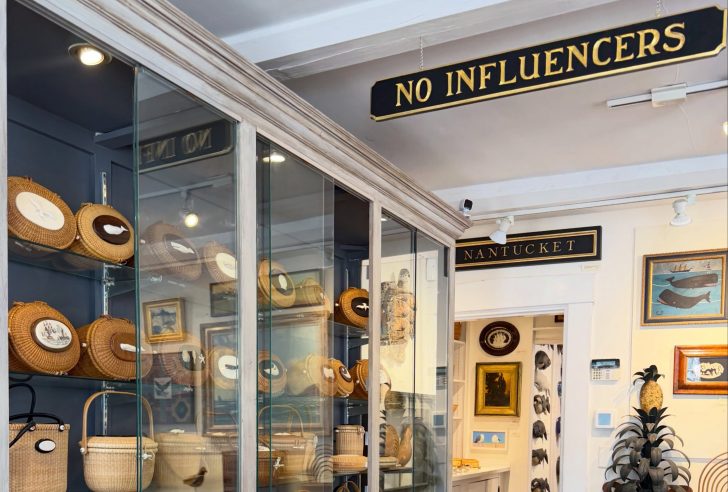
Four Winds / IG / Four Winds Craft Guild has deep roots on Nantucket and sells antiques, local art, handwoven baskets, and other pieces tied to the island’s history.
The Poster Divides Professionals
Lorenze wrote that “mocking women when they become powerful in a new industry isn’t new.” Her response changed the argument almost instantly. A cheeky store sign was suddenly part of a bigger discussion about gender, entrepreneurship, tourism, and who gets treated as a legitimate businessperson online.
However, not everyone agreed with her reading of the situation. Blogger Erin Gates said she understood the frustration surrounding influencer culture and described her own Nantucket visits as less enjoyable because viral locations attracted larger crowds.
That tension already exists across Nantucket. Viral locations can create long lines and heavier foot traffic, while some businesses benefit from the sudden rush of customers. The island’s influencer argument is therefore about more than hurt feelings over a sign. It asks how much online attention a small destination can absorb before the experience itself begins to change.
Portnoy Says Nantucket Shouldn't Become a ‘Content Prop’
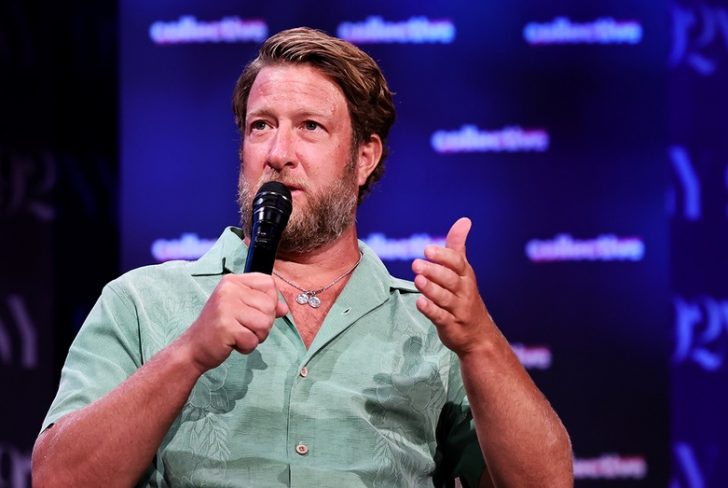
E News / Portnoy entered the controversy with the kind of language people expect from the Barstool founder.
During an appearance on FOX Business’ “Varney & Co.,” he said the problem was not every influencer. He objected to people who arrive without caring about Nantucket itself and simply use the island to produce videos about themselves.
“The type of influencers we don't want in Nantucket are the people who don't care about Nantucket, the community, the beauty of it,” Portnoy said. His point was clear even beneath the sharp delivery. Visitors can film, post, and share their trips, but he believes they should respect the place rather than treat it like a disposable set.
Portnoy also drew a deliberate line between Nantucket and other luxury summer destinations. He argued that people come to Nantucket to relax rather than get noticed. That distinction matters to his position because he sees the island’s low-key character as something worth protecting from a constant cycle of cameras, parties, and viral posts.
He pushed the point much further with his trademark provocation, describing the unwanted crowd as “trashy, ratchet influencers.” That language naturally generated more attention, but his core complaint closely matched Sylvia’s original explanation. Both men were criticizing behavior that turns a community or business into scenery, with little thought for the people already there.