



Keeping up with artificial intelligence can feel like a full-time job. New models, tools, research papers, and startups appear at a rapid pace.
Yet Jeff Dean, one of Google's longest-serving AI leaders, has a different message for young people entering the field: trying to master every part of AI may not be the best use of time.
Dean believes the bigger advantage comes from seeing a wide range of ideas and recognizing connections that others may miss.
Jeff Dean's Advice for Young AI Talent
Dean shared his views at the 2026 Frontier & Pioneer Symposium, marking his first public appearance since leaving Google earlier this month.
He spent 27 years at Google and held several major leadership roles. Dean led Google AI from 2018 to 2023 and then served as Google's chief scientist for the following three years, according to his LinkedIn profile. He has since moved into a new role as co-founder and CEO of DiscoveryLoop, an AI startup working to build what it describes as an autonomous researcher.
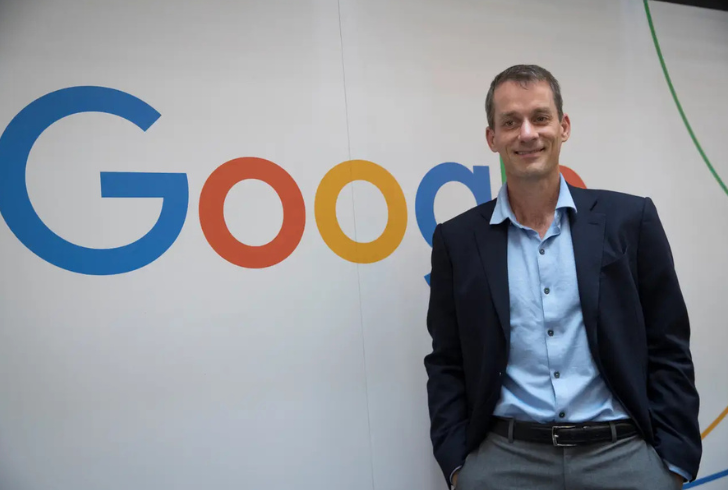
Instagram | insidertech | After 27 years driving Google's AI leadership, Jeff Dean left to launch DiscoveryLoop as its co-founder and CEO.
His advice to students focused less on studying one subject in extreme detail and more on building a broad understanding of what is happening across different areas.
"I often tell students it's better to skim 10 papers than to read one in detail because you then get 10 points in your cloud of what might be possible," Dean said at the event.
He suggested going even wider when time allows.
"Or, even skim 100 abstracts because what you want to be able to do is connect important ideas that have not yet been connected," he said.
The point is not to avoid deep learning. Instead, Dean's approach places value on exposure to many ideas. For people starting their careers, that wider view may help them spot useful connections between fields such as AI, science, medicine, engineering, and education.
Choose Problems Worth Several Years
Dean also offered a practical way to think about long-term work. He advised against choosing a problem that could take 20 years without any clear route forward. At the same time, he warned against spending years on something too simple to have much impact.
He described a middle ground as more useful.
"The perfect shape of a problem that you want to work on in a reasonably long-term manner [is] like five years or something," Dean said.
That kind of timeline allows people to experiment without becoming trapped in a project with no visible direction.
"Try lots of things that might not work. Some of them will," he added.
For Gen Z workers, the message is clear: progress does not always come from picking the safest project. Testing ideas, changing direction, and learning from failed attempts can be part of meaningful work.
Why Dean Remains Positive About AI

Instagram | lauraproctorphoto | "Godfather of AI" Geoffrey Hinton warned that AI could replace workers and enrich tech owners.
Dean's optimism stands apart from concerns raised by other major voices in AI. Geoffrey Hinton, often called the "Godfather of AI" because of his influential research, warned last year that companies could use AI to replace employees and direct a larger share of profits toward technology owners.
Economists have also raised concerns that AI's financial gains may not be shared evenly unless companies and governments make deliberate choices about how the technology is used.
Dean sees another path. He believes AI can increase what people are able to do rather than simply reduce the need for workers. He pointed to possible uses in medical research, healthcare access, education, and complex scientific or technical work.
AI presents "incredibly positive" use cases, Dean said. "I think that's super exciting."
Jeff Dean's advice offers a useful perspective for a generation facing constant pressure to keep up with AI. Success may depend less on knowing every new tool and more on understanding ideas across different fields.
By staying curious, exploring a range of subjects, and choosing problems with enough room for experimentation, young workers can develop skills that remain useful even as AI continues to change.