




• Like a boss
  • Workers lounge
  • Advice Center
  • Economy
Menu
  • Like a boss
  • Workers lounge
  • Advice Center
  • Economy

more in

Advice Center

Will Ferrell Shares the 'Best Showbiz Advice' He Ever Got From His...

Read More

Why Marijuana Use Can No Longer Strip Americans of Their Gun Rights

Read More

What Is Engel’s Law & How it Impacts Economic Growth and Food...

Read More

Realistic Goal-Setting Tips Every First-Time Entrepreneur Should Know

Read More
Advice Center

"Dust Off Yourself and Get Back," Warren Buffett's Sagacious Advice on Failure

July 26, 2026

Failure often feels like the end of the road. A rejected job application, a failed business, or a missed opportunity can leave people questioning their abilities. Many spend months replaying mistakes instead of thinking about the next step.

Warren Buffett sees failure very differently. The legendary investor has built one of the world's greatest business careers, yet his advice on setbacks is surprisingly simple. During a live-streamed interview in 2013, the sagacious billionaire shared just seven words that captured his entire philosophy on failure.

The Seven-Word Lesson of Warren Buffett
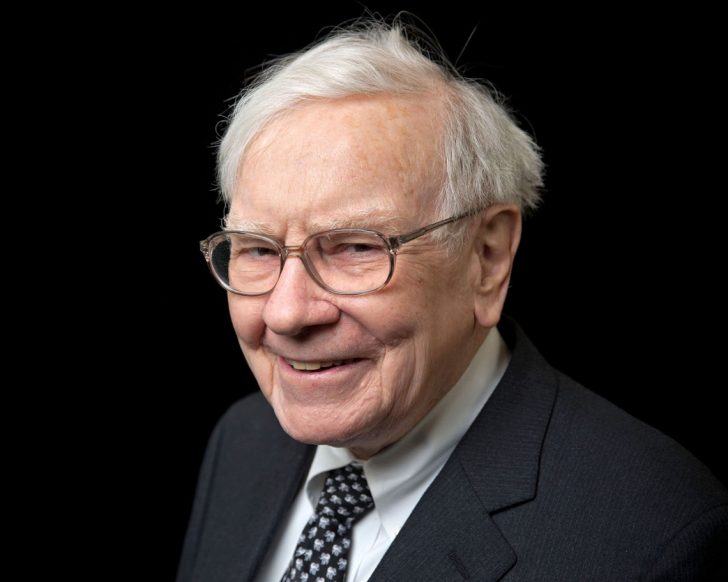
GTN / When asked how he handles business failures and what advice he would offer others, the Oracle of Omaha, 90, answered with only seven words: "Dust off yourself and get back."

That response reflects Buffett's straightforward style. He has always preferred practical advice over complicated theories. His answer suggests that failure deserves attention, but not endless attention.

Setbacks happen in every career. Business owners lose customers. Investors make poor decisions. Students receive rejection letters. Employees miss promotions. Buffett believes none of those moments should permanently define a person's future.

The important part is what happens next. Instead of staying focused on disappointment, people should begin working on the next opportunity. Progress starts when action replaces regret.

Buffett Experienced Rejection Himself

The Oracle of Omaha’s advice comes from personal experience rather than theory. Early in his career, he faced a rejection that could have changed everything. After graduating from the University of Nebraska, Buffett traveled about 10 hours for an interview at Harvard Business School. The meeting ended quickly, and Harvard rejected his application almost immediately.

That disappointment could have convinced him to give up on his plans. Instead, Buffett chose another path by enrolling at Columbia University.

That decision became one of the most important turning points in his life. At Columbia, he studied under Benjamin Graham, the investing pioneer widely considered the father of value investing. Graham's teachings shaped Buffett's investment philosophy for decades. The lessons learned there eventually helped build Berkshire Hathaway into one of the world's most successful companies.

Looking back, the Harvard rejection appears less like a failure and more like an unexpected redirection. One closed door led Buffett toward the mentor who influenced the rest of his career.

Failure Is Information, Not a Final Judgment
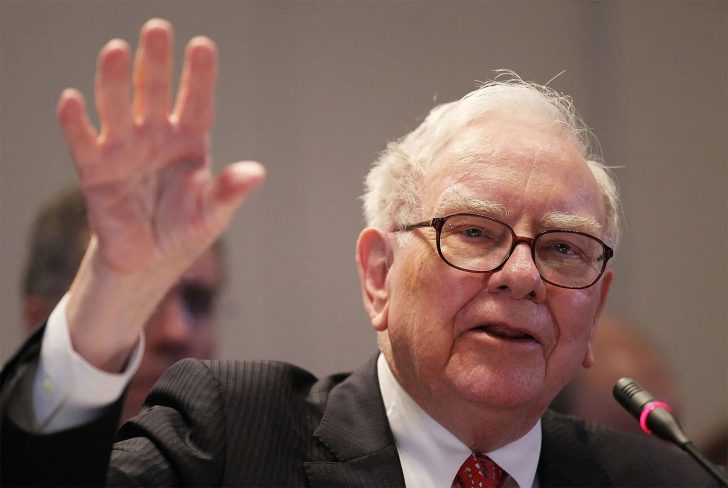
GTN / One of Buffett's most valuable lessons is changing how people interpret failure. Many see rejection as proof they are not talented enough or capable enough to succeed.

Buffett takes a much healthier view. A setback provides information, not a permanent judgment about someone's future. The result may be disappointing, but it also creates an opportunity to adjust and improve.

His Harvard rejection did not convince him that he lacked potential. Instead, it simply showed that one particular path was unavailable. Rather than arguing with the outcome, he searched for another route. That mindset removes much of the emotional weight attached to failure. Instead of asking, "Why did this happen to me?" people can ask, "What should I do next?"

Buffett has repeatedly said that mistakes are unavoidable. Every investor, business leader, and entrepreneur eventually makes poor decisions. The difference comes from how quickly someone responds. Dwelling on past mistakes rarely changes the outcome. Learning from them creates better decisions in the future.

His longtime business partner, Charlie Munger, shared a similar philosophy. Munger often criticized what he called "thumb sucking," a phrase describing people who delay fixing obvious problems while hoping they somehow disappear.

previous article

Will Ferrell Shares the 'Best Showbiz Advice' He Ever Got From His Father

Why Marijuana Use Can No Longer Strip Americans of Their Gun Rights

What Is Engel’s Law & How it Impacts Economic Growth and Food Spending?

Realistic Goal-Setting Tips Every First-Time Entrepreneur Should Know

Is Your Financial Advisor Earning a Commission? Here's Why You Should Walk Away

dont miss

Will Ferrell Shares the 'Best Showbiz Advice' He Ever Got From His Father

July 19, 2026

Why Marijuana Use Can No Longer Strip Americans of Their Gun Rights

July 1, 2026

What Is Engel’s Law & How it Impacts Economic Growth and Food Spending?

June 27, 2026

you may like

TABOOLA

TABOOLA

TABOOLA

must read!

Will Ferrell Shares the 'Best Showbiz Advice' He Ever Got From His Father

Success in Hollywood often depends on more than talent, and actor Will Ferrell believes one conversation with his father helped him understand that early in his career. While speaking about his journey, Ferrell revealed the advice that removed the fear of failure and gave him the confidence to pursue comedy without feeling trapped by the outcome. During Wednesday's episode of the "IMO" podcast, Will Ferrell...
Read More

Why Marijuana Use Can No Longer Strip Americans of Their Gun Rights

The U.S. Supreme Court has issued a major ruling that could reshape the debate around gun rights and marijuana use for years to come. In a unanimous decision handed down on June 18, 2026, the Court ruled that the federal government cannot prosecute someone for possessing a firearm based solely on their marijuana use. The case, "United States v. Hemani," centered on a federal law...
Read More

What Is Engel’s Law & How it Impacts Economic Growth and Food Spending?

Most people spend more money on food when their income rises. That sounds obvious. What is less obvious is that food usually takes up a smaller share of their total budget over time. This simple idea sits at the heart of Engel's Law, one of the most important concepts in economics. German statistician Ernst Engel introduced this principle in 1857 after studying household spending patterns....
Read More

Realistic Goal-Setting Tips Every First-Time Entrepreneur Should Know

Starting a business often begins with excitement, ambition, and a vision of success. Yet many first-time entrepreneurs discover that ambition alone does not create sustainable growth. Unrealistic expectations can drain resources, create unnecessary pressure, and make progress feel invisible even when meaningful achievements are taking place. The most successful founders rarely build companies through dramatic breakthroughs. Instead, they focus on achievable milestones, measurable learning, and...
Read More

must read!

How the Space Economy Is Transforming Global Industries

Space was once viewed as a field reserved for governments, defense agencies, and scientific research. High costs, limited launch opportunities, and specialized missions kept commercial participation to a minimum. For decades, investments in space focused on national priorities rather than business growth. That picture looks very different today. Private companies now play a central role in launching satellites, expanding broadband access, producing Earth observation data,...
Read More

©Copyright: 2021 TheBusinessLeads.com

  • About Us
  • Contact Us
  • Privacy Policy
  • Terms Of Use
Menu
  • About Us
  • Contact Us
  • Privacy Policy
  • Terms Of Use
  • Like a boss
  • Workers lounge
  • Advice Center
  • Economy
Menu
  • Like a boss
  • Workers lounge
  • Advice Center
  • Economy