





Space was once viewed as a field reserved for governments, defense agencies, and scientific research. High costs, limited launch opportunities, and specialized missions kept commercial participation to a minimum. For decades, investments in space focused on national priorities rather than business growth.
That picture looks very different today. Private companies now play a central role in launching satellites, expanding broadband access, producing Earth observation data, and supporting defense operations.
According to the Space Foundation, the global space economy reached approximately $613 billion in 2024, marking 7.8% year-over-year growth. Commercial businesses accounted for nearly 78% of total market activity, compared to roughly 60% a decade earlier. Launch activity has also accelerated. During 2025, more than 329 orbital launch attempts took place worldwide, while satellites reached orbit roughly every 28 hours during the first half of the year, six hours faster than the record pace set in 2024.
These figures highlight more than market expansion. They reflect a lasting change in how space technology is built, funded, and used. Lower launch costs, advanced satellite networks, and rising government demand have created an industry with multiple revenue streams that continue to expand across commercial and public sectors.
Cost Revolution Behind Commercial Space
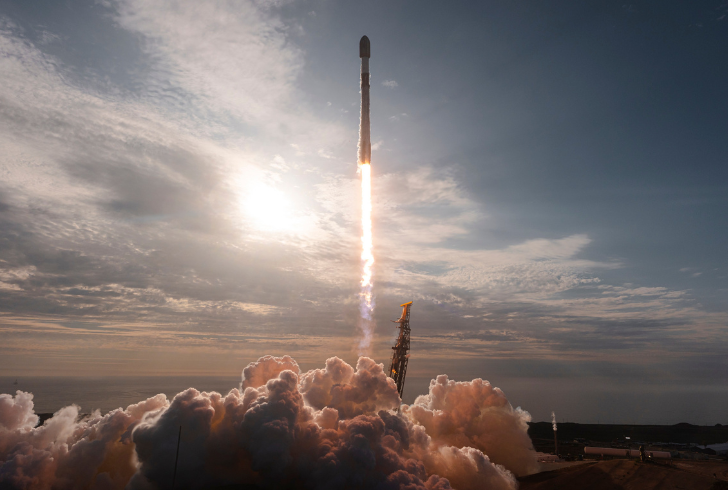
Instagram | spacex | While Falcon 9 made spaceflight affordable, Starship aims to make it revolutionary.
For many years, sending equipment into low Earth orbit came with a staggering price tag. Depending on the launch vehicle, transporting one kilogram of payload typically cost anywhere between $10,000 and $65,000. Those economics limited access to government agencies and a handful of expensive communications satellites.
Reusable rockets changed that equation.
SpaceX's Falcon 9 reduced launch costs to approximately $2,700 per kilogram, making frequent launches commercially practical. The company's long-term objective with Starship goes much further. Full reusability is expected to reduce launch costs below $200 per kilogram, representing a decline of more than 95% compared to traditional expendable launch vehicles that dominated the industry only a decade ago.
Lower transportation costs have influenced nearly every segment of the space economy. Satellite operators can now deploy much larger constellations without facing the financial barriers that once limited expansion. As satellite numbers increase, the time required to revisit the same location on Earth falls dramatically. Instead of waiting days between observations, imaging systems can capture updates within hours or even minutes.
This higher observation frequency changes how satellite information is used. Rather than collecting isolated photographs, satellite networks generate continuous streams of data that support agriculture, disaster response, infrastructure monitoring, environmental research, shipping logistics, and national security.
Affordable launches have also expanded global communications. Satellite broadband is moving beyond specialized equipment toward services that can connect directly with ordinary smartphones. That shift could help address connectivity challenges still affecting nearly three billion people, turning an infrastructure gap into a growing commercial market.
SpaceX's Expanding Influence
SpaceX remains one of the strongest examples of how lower launch costs have reshaped the industry.
The company completed 165 Falcon 9 and Falcon Heavy missions during 2025, accounting for more than half of all orbital launches worldwide. By payload mass, those missions delivered approximately 65% of all cargo sent into orbit during the year.
Its Starlink broadband constellation also continued rapid expansion, surpassing 10,000 active satellites. Estimated revenue reached $11.4 billion during 2025, while projections suggest revenue could approach $20 billion in 2026 as subscriber growth and network coverage continue to increase.
Meanwhile, Starship remains in active development. By late May 2026, the program had completed 12 flight tests and continued working toward its first orbital payload delivery, expected during the second half of 2026. If successful, the rocket would introduce the largest payload capacity currently planned for commercial launch operations.
These milestones demonstrate how launch providers are no longer serving only transportation needs. They are also creating communications networks, supporting government missions, and enabling businesses that depend on constant access to orbit.
A Competitive Launch Market
Although SpaceX dominates today's launch market, commercial space has developed into a competitive ecosystem with companies serving different mission profiles and payload requirements.
Rocket Lab has become one of the leading small-launch providers through its Electron rocket. During 2025, the company completed 21 successful Electron missions, maintaining a 100% mission success rate throughout the year.
Financial performance also reflected growing demand. Rocket Lab generated $602 million in annual revenue, representing 38% year-over-year growth, while ending the year with a backlog valued at $1.85 billion. Approximately 37% of that backlog, or nearly $685 million, is expected to convert into revenue within twelve months without requiring additional contract wins.
The company's role has also expanded beyond launch services. Rocket Lab secured its largest agreement to date when the Space Development Agency awarded an $816 million contract to build 18 satellites for the Tracking Layer Tranche 3 program. The contract signals a shift from launch provider to a broader national security contractor with satellite manufacturing capabilities.
Momentum continued into 2026. During the first quarter, Rocket Lab reported a record $200 million in quarterly revenue. The company also announced that it signed more launch agreements during Q1 2026 than throughout all of 2025, pushing its contracted launch manifest beyond 70 missions.
Another important development is the company's Neutron rocket, designed for medium-lift missions that sit between Electron's smaller payload capacity and SpaceX's heavier launch vehicles. Its first launch is currently targeted for Q4 2026, with missions expected to support satellite constellations and government programs requiring larger payloads.
Firefly Aerospace's Growing Role
Firefly Aerospace has expanded its role across several parts of the space industry.
In early 2025, the company's Blue Ghost spacecraft became the first commercial vehicle to achieve a successful lunar landing under NASA's Commercial Lunar Payload Services (CLPS) program. The mission showed that private companies are taking a larger role in lunar exploration. For many years, government agencies led most lunar missions.
Firefly expects 2026 revenue to range between $420 million and $450 million. At the same time, it continues to work on the Missile Defense Agency's SHIELD program. This partnership strengthens the company's position in defense-related space projects.
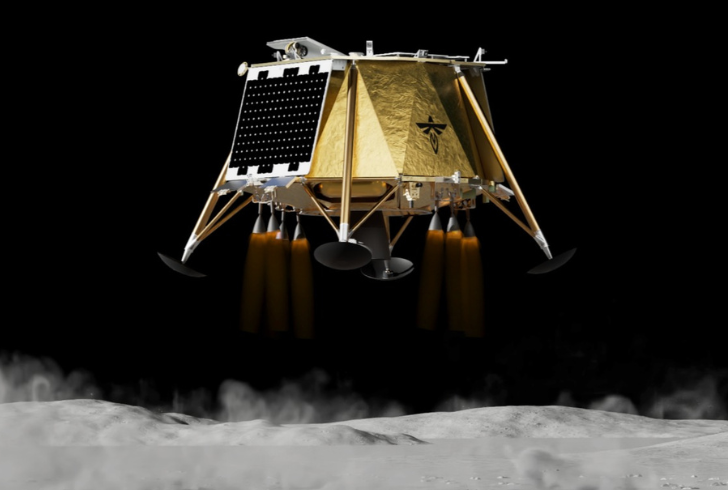
Instagram | fireflyaerospace | Firefly expects up to $450M in 2026 revenue while advancing its MDA SHIELD defense partnership.
Firefly's business model reflects a wider industry trend. Instead of offering just one service, many commercial space companies now handle launch operations, spacecraft development, lunar missions, satellite manufacturing, and defense contracts. This approach creates multiple revenue streams and supports rising demand from both government and commercial customers.
Launch systems are also becoming more affordable and reliable. As a result, companies are expanding beyond transportation services. Growth is now driven by the valuable data collected in space. Satellite networks provide intelligence that supports governments, businesses, and consumers across many industries.
The Data Economy Beyond Orbit
Lower launch costs have made satellites easier to deploy, but the real commercial value increasingly comes from the data they produce. Earth observation, communications, and artificial intelligence are creating recurring revenue models that extend far beyond the launch itself.
Planet Labs is one of the strongest examples of this shift. The company operates a constellation of nearly 200 satellites that images the Earth's entire land surface every day. Instead of capturing occasional snapshots, the network produces a continuous visual record that allows governments and businesses to monitor changes over time.
The company's financial results reflect growing demand. For fiscal year 2026, Planet Labs reported $307.7 million in revenue, representing 26% year-over-year growth. It also achieved an important milestone by recording its first year of adjusted EBITDA profitability at $15.5 million, alongside positive free cash flow of $52.9 million. By March 2026, the company had built a $900 million backlog, providing strong visibility into future revenue.
Customer demand has also shifted toward defense and intelligence. Revenue from those sectors increased by more than 70% year over year during one recent quarter. Contracts include organizations such as the National Geospatial-Intelligence Agency, the National Reconnaissance Office, the U.S. Navy, and NATO.
Technology is also changing how satellite information is delivered. Planet's next-generation Pelican satellites incorporate NVIDIA (NVDA) processors that perform AI analysis directly in orbit. Instead of transmitting massive image files back to Earth, the satellites can identify specific targets, including vessels, vehicles, or structural changes, and send only the processed intelligence. This approach reduces data transfer requirements while increasing the speed and value of the information.
Satellite Broadband Reaches Markets
Communications remain another major growth area within the space economy.
AST SpaceMobile (ASTS) is developing what it describes as the world's first space-based cellular broadband network designed to connect directly with standard smartphones, eliminating the need for specialized satellite hardware.
Its BlueBird 6 satellite, launched in December 2025, became the largest commercial communications phased-array satellite placed into low Earth orbit. The system is designed to deliver peak download speeds exceeding 120 Mbps directly to conventional mobile devices.
The company plans to have 45 satellites operating by the end of 2026, with launches scheduled approximately every one to two months. Expansion is supported by partnerships with major telecommunications providers, including AT&T (T), T-Mobile (TMUS), Verizon (VZ), and Vodafone (VOD).
Commercial interest has already translated into financial commitments. Mobile network partners and the U.S. government have secured more than $1.2 billion in contracted revenue commitments, highlighting demand for satellite-based mobile connectivity across both commercial and public sectors.
Defense Fuels Space Growth
Commercial businesses often receive the most attention, yet government spending continues to provide one of the strongest foundations for the space industry.
Space is now officially recognized as a military operating domain by every major global power. As a result, investments in satellite communications, missile detection, navigation systems, and space monitoring have become long-term national priorities rather than optional technology projects.
During 2024, U.S. government spending on space programs reached approximately $77 billion. Combined military and intelligence budgets allocated more than $29 billion toward areas such as missile warning systems, secure satellite communications, GPS resilience, and space domain awareness.
Another important development has been the growing use of Other Transaction Authority (OTA) agreements by the U.S. Space Force. These agreements reduce traditional procurement delays and make it easier for commercial companies to secure government contracts. As a result, many private space businesses now serve both commercial customers and national security programs.
The trend extends well beyond the United States.
According to the Space Foundation, global government spending on space programs increased 6.7% during 2024. Countries across Europe and Asia are investing heavily in independent launch capabilities, satellite production, and space surveillance.
Airbus Defence and Space reported 11% revenue growth, reaching $14.5 billion in 2025, while Leonardo's Space division recorded 11% growth, generating approximately $1.08 billion over the same period.
Nations including Japan, South Korea, France, and Germany continue expanding sovereign space programs to reduce dependence on external providers while strengthening national security infrastructure.
Toward a $1 Trillion Market
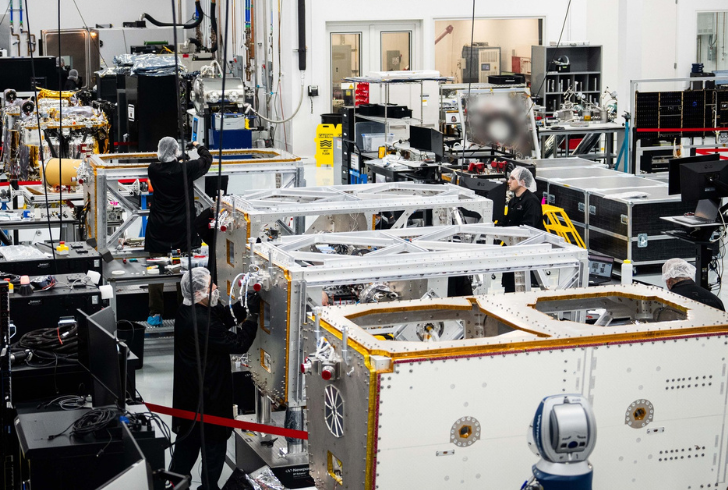
Instagram | rocketlabcorp | Cheap launches, satellite expansion, and AI are transforming space into a $1 trillion industry by 2032.
Several long-term trends are shaping the future of the space economy at the same time. Launch costs continue to decline. Satellite constellations keep expanding. Artificial intelligence improves how orbital data is processed, while subscription-based services create more predictable revenue.
Based on these developments, the Space Foundation projects that the global space economy could exceed $1 trillion by 2032.
Growth is no longer tied to a single technology or company. Instead, it spans multiple interconnected segments that support one another.
A large share of future activity is expected to come from four key areas:
1. Launch and infrastructure, including rockets, spacecraft manufacturing, propulsion systems, and materials supporting orbital operations.
2. Commercial space services, covering satellite broadband, Earth observation, navigation, precision timing, and analytics platforms that convert satellite information into business intelligence.
3. Defense space systems, including sovereign launch capabilities, missile warning networks, secure communications, GPS resilience, and space situational awareness.
4. Emerging technologies, such as orbital servicing, space debris removal, and next-generation small satellite manufacturing that remain in earlier stages of commercialization.
Each segment contributes to a broader ecosystem. Affordable launch services make satellite deployment possible. Satellite networks generate valuable data. Defense investments strengthen infrastructure, while commercial demand encourages continued innovation across the industry.
Space as Economic Infrastructure
The space sector has progressed far beyond government-funded exploration. It now supports communications, financial services, logistics, environmental monitoring, agriculture, disaster response, defense, and global connectivity through an expanding commercial network.
The numbers reinforce that transition. A $613 billion global market, 329 orbital launches during 2025, rapidly expanding satellite constellations, multibillion-dollar government investments, and rising commercial revenues all point to an industry that is already generating measurable economic value rather than promising future potential.
As launch costs continue to fall and satellite applications expand, space is becoming part of everyday economic infrastructure. The next phase of growth will likely depend on how effectively companies combine launch capabilities, data services, artificial intelligence, communications, and defense technologies into practical solutions that serve governments, businesses, and consumers alike.