



• Like a boss
  • Workers lounge
  • Advice Center
  • Economy
Menu
  • Like a boss
  • Workers lounge
  • Advice Center
  • Economy

more in

Advice Center

Realistic Goal-Setting Tips Every First-Time Entrepreneur Should Know

Read More

Is Your Financial Advisor Earning a Commission? Here's Why You Should Walk...

Read More

More Americans Rely on AI for Financial Advice, But Is It a...

Read More

Why So Many Entrepreneurs Regret Their Business Entity Choice

Read More
Advice Center

What Is Engel’s Law & How it Impacts Economic Growth and Food Spending?

June 27, 2026

Most people spend more money on food when their income rises. That sounds obvious. What is less obvious is that food usually takes up a smaller share of their total budget over time. This simple idea sits at the heart of Engel's Law, one of the most important concepts in economics.

German statistician Ernst Engel introduced this principle in 1857 after studying household spending patterns. His findings revealed a consistent trend across different income levels. As families earn more money, they spend more on food in dollar terms, but food claims a smaller percentage of their overall spending.

More than 150 years later, economists still use Engel's Law to understand consumer behavior, economic development, and living standards. It helps explain why wealthy countries look different from developing economies and why spending habits change as incomes grow.

Engel's Law and Household Spending
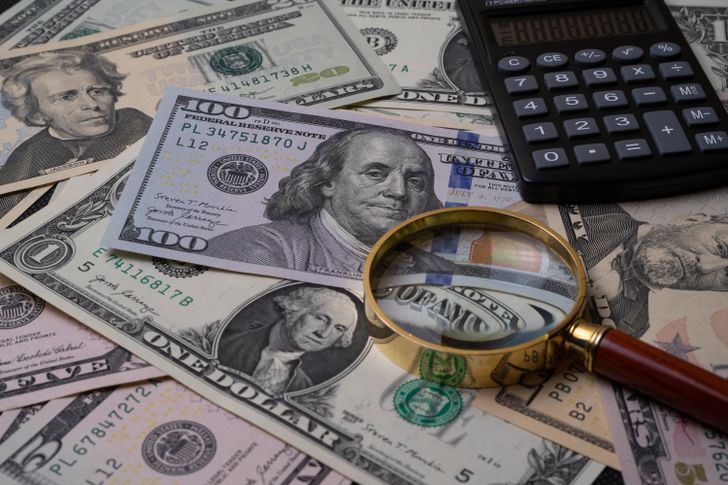
Sash / Pexels / Engel's Law says that as household income increases, the proportion of income spent on food decreases.

However, this does not mean people buy less food. Instead, food spending grows at a slower pace than income.

If there is a family earning $2,000 per month that spends $800 on food. Food accounts for 40% of its budget. If the family's income rises to $4,000 per month, food spending might increase to $1,000. Although the family spends an extra $200 on food, food now represents only 25% of total income.

This pattern appears in countries across the world. Families with limited incomes often devote a large share of their earnings to basic needs such as food. Wealthier households have more room to spend on housing, education, healthcare, travel, entertainment, and savings.

The concept argues that human beings can only eat so much food. Once basic nutritional needs are met, additional income tends to flow into other areas of life. That shift changes both personal budgets and entire economies.

Why Economists Focus on Food Spending

Engel's Law is closely linked to the concept of income elasticity of demand. This measures how much demand for a product changes when income changes. Food is generally considered a necessity good.

Necessity goods have an income elasticity between zero and one. When income rises, spending on these goods increases, but not as quickly as income itself. Families may buy higher-quality products, dine out more often, or add specialty items to their shopping carts. Even so, food spending rarely keeps pace with income growth.

Luxury goods behave differently. Products such as premium vacations, designer fashion, and high-end electronics often experience demand growth that exceeds income growth. As earnings rise, consumers typically allocate a larger share of their budgets to these purchases.

How Engel's Law Drives Economic Growth

Life / Pexels / Engel's Law shapes the development of entire nations. As incomes rise across a population, spending patterns change in ways that transform economic structures.

In lower-income economies, agriculture often accounts for a large share of jobs and production. Food demand dominates household budgets, so significant resources remain tied to farming and food production. As incomes increase, demand expands more rapidly for manufactured products and services.

Workers and investment gradually shift toward industries such as technology, healthcare, finance, education, and manufacturing. These sectors grow because consumers now have extra money to spend beyond essential food purchases. The economy becomes more diversified and productive.

This process is known as ‘structural transformation.’ It is one of the defining features of economic development. Countries do not simply produce more of everything at the same rate. Instead, resources move toward sectors that benefit from rising consumer demand.

previous article next article

Realistic Goal-Setting Tips Every First-Time Entrepreneur Should Know

Is Your Financial Advisor Earning a Commission? Here's Why You Should Walk Away

More Americans Rely on AI for Financial Advice, But Is It a Good Thing?

Why So Many Entrepreneurs Regret Their Business Entity Choice

How to Stay Calm and Manage Stock Market Declines? Hear From Warren Buffett

dont miss

Realistic Goal-Setting Tips Every First-Time Entrepreneur Should Know

June 21, 2026

Is Your Financial Advisor Earning a Commission? Here's Why You Should Walk Away

June 3, 2026

More Americans Rely on AI for Financial Advice, But Is It a Good Thing?

May 31, 2026

you may like

TABOOLA

TABOOLA

TABOOLA

must read!

Realistic Goal-Setting Tips Every First-Time Entrepreneur Should Know

Starting a business often begins with excitement, ambition, and a vision of success. Yet many first-time entrepreneurs discover that ambition alone does not create sustainable growth. Unrealistic expectations can drain resources, create unnecessary pressure, and make progress feel invisible even when meaningful achievements are taking place. The most successful founders rarely build companies through dramatic breakthroughs. Instead, they focus on achievable milestones, measurable learning, and...
Read More

Is Your Financial Advisor Earning a Commission? Here's Why You Should Walk Away

For years, many people assumed financial advisors were paid to help clients make smart money decisions. That sounds reasonable. The problem is that some advisors are not paid by their clients. They are paid by the companies whose products they recommend. That difference matters more than most people realize. A growing number of investing experts now share a blunt warning. If your financial advisor earns...
Read More

More Americans Rely on AI for Financial Advice, But Is It a Good Thing?

Ask a chatbot where to put your retirement savings, and you will get an answer in seconds. That speed explains why half of Americans have turned to artificial intelligence for financial guidance. Young people lead the charge, with 82% of Millennials and Gen Z using AI to manage their money, according to a new survey. The numbers sound impressive until you look at what the...
Read More

Why So Many Entrepreneurs Regret Their Business Entity Choice

Starting a business often feels like a straight path toward independence and financial control. The reality looks different for many founders once operations scale, revenue grows, and tax obligations begin to tighten. Nearly 20% of small businesses in the U.S. close within the first year, and about half do not reach year five. While market fit and execution matter, professionals who work closely with tax...
Read More

must read!

El Niño Returns With Fresh Risks for the Global Economy

The global economy has spent the past few years absorbing one disruption after another. Inflation, supply chain bottlenecks, energy market shocks, and geopolitical conflicts have already raised costs for businesses and households. Now, another powerful force is gathering momentum. El Niño has officially returned, and experts warn that its effects could reach far beyond weather forecasts. The last El Niño cycle in 2023 touched nearly...
Read More

©Copyright: 2021 TheBusinessLeads.com

  • About Us
  • Contact Us
  • Privacy Policy
  • Terms Of Use
Menu
  • About Us
  • Contact Us
  • Privacy Policy
  • Terms Of Use
  • Like a boss
  • Workers lounge
  • Advice Center
  • Economy
Menu
  • Like a boss
  • Workers lounge
  • Advice Center
  • Economy