





For decades, many business leaders viewed environmental protection as a cost. The common belief was simple. Companies could either focus on profits or focus on nature. Doing both seemed difficult.
New research is proving that assumption wrong. Strong evidence now shows that healthy ecosystems help businesses grow, improve productivity, and create new revenue opportunities. Nature is no longer just an environmental concern. It is increasingly being recognized as an economic asset.
A landmark study from New Zealand, along with new global financial data and real world business examples, paints a clear picture. Companies that invest in nature often see measurable financial benefits. The numbers are becoming too significant to ignore.
Biodiversity Delivers Real Business Results
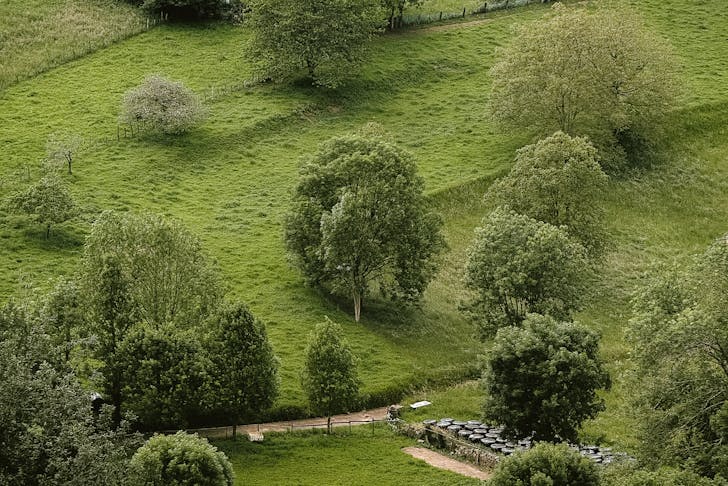
Alisa / Pexels / One of the strongest pieces of evidence comes from a major New Zealand study that examined more than 117,000 business observations between 2009 and 2022.
Researchers combined company performance data with detailed biodiversity and natural capital indicators.
The results were remarkably clear. A 1% increase in natural capital was linked to sales that were approximately 0.13% higher and profits that were around 0.15% higher on average. While those percentages may seem modest at first glance, they become highly meaningful when applied across thousands of businesses and billions of dollars in economic activity.
The impact was even stronger in industries that depend directly on nature. Agriculture, forestry, and other primary sectors showed far greater gains when ecosystems remained healthy and productive.
For businesses operating in less developed areas, a 1% increase in natural capital was associated with sales that were an additional 0.71% to 0.81% higher than the wider economy. These results highlight something many business owners already understand from experience. Healthy soils, clean water supplies, pollinators, and natural pest control services improve efficiency and reduce operating costs.
Nature is not simply a backdrop for economic activity. It functions as a productive infrastructure that supports business performance every day.
Environmental Policies Can Strengthen Growth
Critics often argue that environmental regulations slow economic progress. The New Zealand research challenges that claim with real-world data.
Researchers examined major conservation efforts, including the country's Predator Free 2050 programme and the Zero Carbon Act. They found that the positive link between ecosystem health and business productivity became stronger after these initiatives were introduced.
Following the implementation of these policies, the productivity benefits associated with a 1% increase in natural capital improved by an additional 0.05%. That improvement may sound small, but across an entire economy it represents a substantial gain.
The findings suggest that environmental policies can create economic value rather than restrict it. Investments in ecological restoration can generate returns that extend well beyond conservation projects themselves.
A $10.1 Trillion Opportunity is Emerging

Damir / Pexels / According to the World Economic Forum, nature-positive business models could generate up to $10.1 trillion in annual business value and cost savings by 2030.
That opportunity spans more than 50 investable business areas across 13 different sectors. These opportunities range from sustainable agriculture and forestry to ecosystem restoration and nature-based carbon markets.
At the same time, global investment patterns reveal a striking imbalance. The United Nations Environment Programme estimates that roughly $7.4 trillion continues to flow into activities that damage ecosystems every year.
In contrast, only about $220 billion is invested annually in nature-based solutions. That creates a funding gap of roughly 30 to 1. From a business perspective, this gap represents a major market opportunity. Investors who move early into nature-positive sectors may gain access to significant growth as markets continue to evolve.
A major milestone arrived in October 2025 with the launch of ISO 14054, the world's first global natural capital accounting standard. The framework helps organizations identify, measure, and report their dependencies and impacts on nature.