





Russia’s oil earnings dropped sharply in March, adding pressure to federal finances at a time when economic strain was already building. The decline came just ahead of global supply disruptions linked to tensions in the Middle East, which later pushed crude prices higher and shifted the revenue outlook.
Russian producers paid 494.9 billion rubles, roughly $6.18 billion, in oil-related taxes during the month. That figure represents a 48% drop compared with the same period last year, based on Finance Ministry data released Friday.
Total oil and gas revenue flowing into the federal budget also declined. Collections fell nearly 43% year over year to 617 billion rubles, highlighting how closely state income tracks global pricing and currency shifts.
These results are tied to taxes calculated using February pricing for Urals crude, Russia’s main export blend.
Weak Urals Pricing and Currency Pressure

Instagram | heliosintel | Discounts to buyers and currency pressures pushed Russian oil prices lower during the period.
During the calculation period, Urals crude averaged below $45 per barrel, according to official data. That figure sits well under the $59-per-barrel benchmark built into Russia’s 2026 budget.
Several forces pushed prices lower at the time. Remaining buyers of Russian crude continued to demand steep discounts due to ongoing energy sanctions. At the same time, a stronger ruble reduced the value of dollar-linked oil sales when converted into local currency.
The exchange rate used for March calculations stood at 76.85 rubles per dollar, compared with 92.9 rubles per dollar in March 2025. That shift meant fewer rubles were generated per barrel sold.
Urals crude was priced at $44.59 per barrel for budget calculations, down from $61.69 a year earlier.
Budget Pressure Linked to Commitments
Lower energy income added to fiscal strain as overall economic growth slowed. With oil and gas inflows declining, the pressure on a budget already stretched by elevated wartime spending became more pronounced.
Because these revenues are central to federal financing, the drop raised concerns about fiscal stability. The weaker intake in March also widened the deficit, as spending levels remained high.
Oil revenue reporting includes multiple streams, such as extraction taxes on gas condensate, profit-based taxes, and subsidies for refiners.
Despite the annual decline, March still saw a seasonal lift. Revenues reached a five-month high due to the tax calendar, which concentrates profit-based collections in March, April, July, and October. This pattern often creates short-term spikes even during broader downturns.
Price Shift Following Middle East Conflict
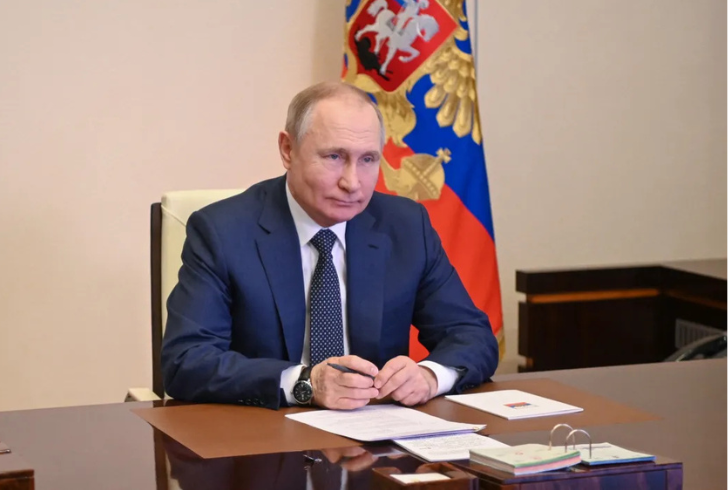
Instagram | gmanews | Putin is emphasizing fiscal discipline and caution in the energy sector amid concerns over future oil price volatility.
Market conditions shifted quickly after March. Urals crude prices climbed sharply following escalating tensions in the Middle East that disrupted global supply flows.
By the end of the month, Urals crude delivered to India traded above $120 per barrel, at times exceeding the Brent benchmark. Disruptions around the Strait of Hormuz, a key route for Gulf exports, intensified supply concerns.
Russian crude, which bypasses that route, became more attractive to Asian buyers as logistics tightened.
A U.S. policy decision allowing several countries, including India, to continue purchasing Russian oil already in transit further supported demand.
As prices rose, Russia’s short-term revenue outlook improved, with expectations of higher oil and gas income.
Spending Outlook and Policy Caution
Higher prices reduced the immediate need for spending cuts in the federal budget. Defense spending could still rise if the conflict continues, according to sources familiar with fiscal planning.
At the same time, President Vladimir Putin has continued to stress caution in both government and energy-sector spending, reflecting concern that current price gains may not last.
March’s data captures a sharp contrast: a period of declining revenue driven by weak pricing and currency pressure, followed quickly by a market-driven rebound as geopolitical tensions lifted crude prices.